

Tuesday, June 22, 2021
No Result
View All Result
CRETech IoT NYC
Advertisement
  • Home
  • IoT
    • Sensors and Devices
    • Security
    • Building Automation
      • Predictive Maintenance
    • Wireless IoT
  • CRETech NYC
    • News and Events
  • Architectural Design
    • Building Design
      • Access Control & Surveillance
      • Audio Visual
      • Cabling Infrastructure
      • Command Centers
      • In Building Cellular
      • Power Over Ethernet POE
        • POE Lighting
        • POE Security
      • Unified Communication
      • Wireless Networks
  • Green Buildings
    • Sustainable Architecture
    • Green Certifications
    • Energy Optimization
    • Wellness
  • Connectivity
    • 5G
    • Fiber Connectivity
    • Outside Plant OSP
  • Blockchain IoT
    • Commercial Real Estate Blockchain
  • Relocation & Leases
    • Technology Relocation
  • White Papers
    • Smart Buildings
    • Smart Cities
  • Home
  • IoT
    • Sensors and Devices
    • Security
    • Building Automation
      • Predictive Maintenance
    • Wireless IoT
  • CRETech NYC
    • News and Events
  • Architectural Design
    • Building Design
      • Access Control & Surveillance
      • Audio Visual
      • Cabling Infrastructure
      • Command Centers
      • In Building Cellular
      • Power Over Ethernet POE
        • POE Lighting
        • POE Security
      • Unified Communication
      • Wireless Networks
  • Green Buildings
    • Sustainable Architecture
    • Green Certifications
    • Energy Optimization
    • Wellness
  • Connectivity
    • 5G
    • Fiber Connectivity
    • Outside Plant OSP
  • Blockchain IoT
    • Commercial Real Estate Blockchain
  • Relocation & Leases
    • Technology Relocation
  • White Papers
    • Smart Buildings
    • Smart Cities
No Result
View All Result
CRETech IoT NYC
No Result
View All Result
Home Commercial Architecture

How Bamboo Bends to Create Curved Structures

May 13, 2021
in Commercial Architecture
0
How Bamboo Bends to Create Curved Structures

How Bamboo Bends to Create Curved Structures

Courtesy of BambooU

Share
Share

Related articles

House C / Martin Lejarraga Oficina de Arquitectura

House C / Martin Lejarraga Oficina de Arquitectura

June 22, 2021
Apartment 02 / Hugo Oliveira Arquitetura

Apartment 02 / Hugo Oliveira Arquitetura

June 22, 2021
  • Facebook

  • Twitter

  • Pinterest

  • Whatsapp

  • Mail

Or

Bamboo has endless possibilities and when combined with creativity, it can lead to a wide range of interesting shapes. In its natural form, it is a straight, slightly tapering pole. But how do we bend it to create fluid, dynamic spaces? Bamboo is naturally flexible and can be flexed into a slight bend and simple framed structures can be built using bamboo’s natural straight form.

However, it requires specific techniques to achieve extensive curvilinear forms. In the structures we build here in Bali, there are 3 techniques to create curved structures using bamboo. These are:

  • Rup Rup
  • Split Members
  • Lidi Bundles

Related Article

If We Were To Design The Ideal Building Material, It Would Look A Lot Like Bamboo
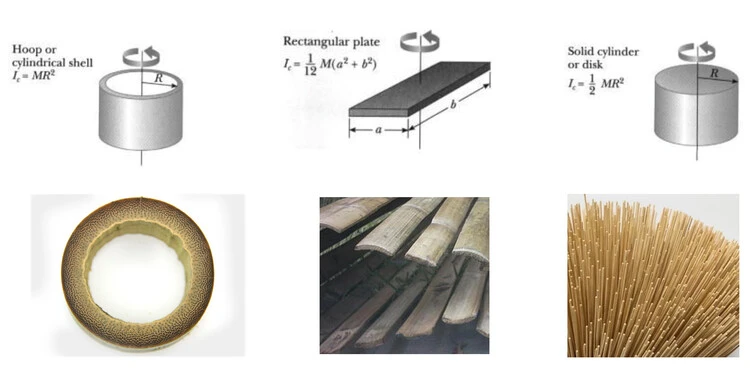

Understanding the ability of bamboo to bend through the moment of inertia of different cross sections. Image Courtesy of BambooU

Before learning to bend bamboo we need to understand the moment of inertia of different cross-sections of the type of material we use for these techniques.

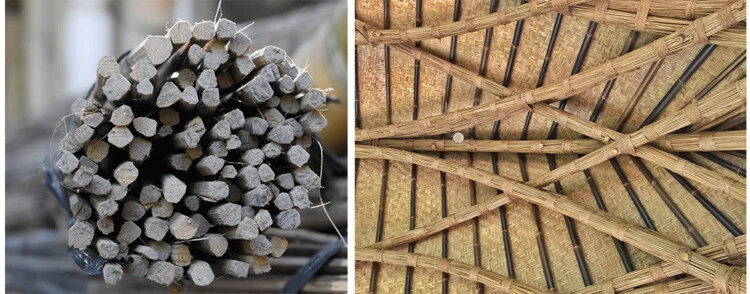
In a simpler way, a smaller surface area and solid form will have more flexibility compared to a hollow cylindrical form. Full poles have less flexibility than splits and splits have less flexibility than lidi bundles (full poles < splits < lidi).

For the rup-rup technique, we use full-round pole bamboo in its natural form. For the split members technique we use bamboo splits which are wide and flat rectangular shaped slats and for lidi bundles, we also use bamboo splits which are thinner and in a solid cylindrical form.

1. Rup-Rup 
Courtesy of BambooU
Courtesy of BambooU

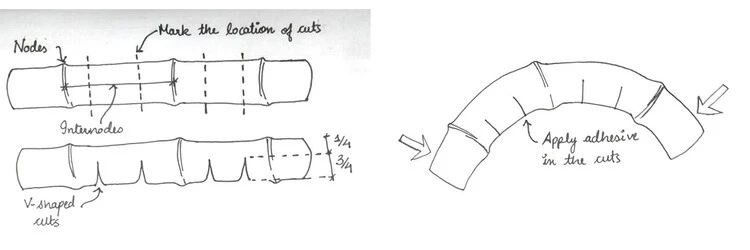
Shaping and curving whole, hollow bamboo poles in their natural form is challenging because of their cylindrical profile but it can be done using the rup-rup technique. This is a process where v-shaped cuts are made along the axis of the bamboo pole wherever it is necessary to achieve the shape we require.
Courtesy of BambooU
Courtesy of BambooU

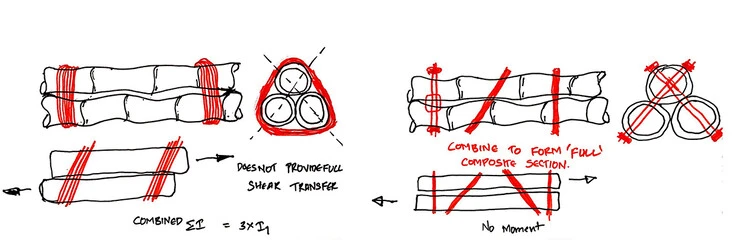
It is important to note that this cutting of the wall culm reduces the structural integrity of the full poles to only the part that has not been cut, which is just a split. For structural members to maintain structural integrity, we bundle two or more full-bamboo poles together as per our requirement. We bolt them together with threaded rods and bamboo pins to ensure there is no moment in the bundle.
© James Wolf
© James Wolf

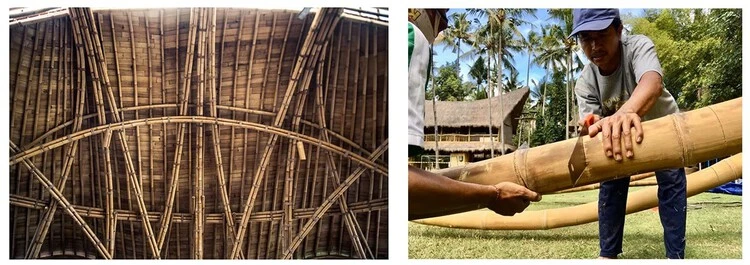
This technique is used to make elements like structural arches, ridge members for roofs, furniture, and decorative elements like railings. Dendrocalamus asper locally known as Bambu petung and Gigantochloa apus locally known as Bambu tali are commonly used for the structural elements and Bambusa Blumeana locally known as Bambu duri for furniture and decorative elements.
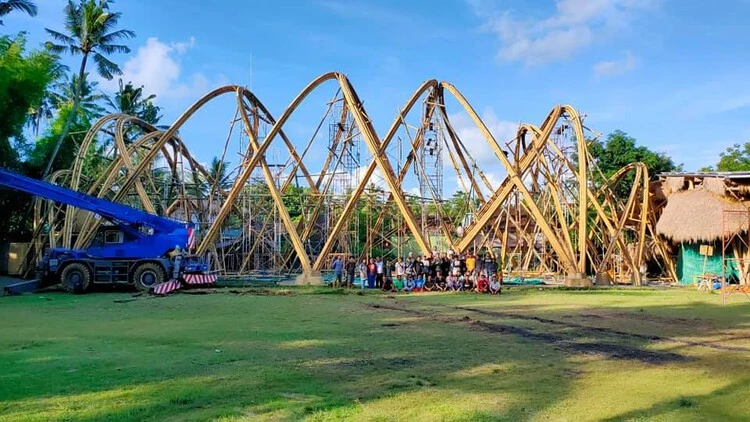
The Green School's building, from IBUKU, in progress. Image © James Wolf and Jules de Laage
The Green School’s building, from IBUKU, in progress. Image © James Wolf and Jules de Laage

The new Green School Bali gym designed by IBUKU is the largest arched structure in bamboo of its kind in the world and is composed of 18 arches, which are built on the ground using the rup-rup technique. They have bundled 6 Dendrocalamus asper poles to achieve structural integrity according to the design.

Mepantigan auditorium and Turtle classroom, also at the Green School, designed by IBUKU are some other examples of structures built using the rup-rup technique.

2. Splits
Courtesy of BambooU
Courtesy of BambooU

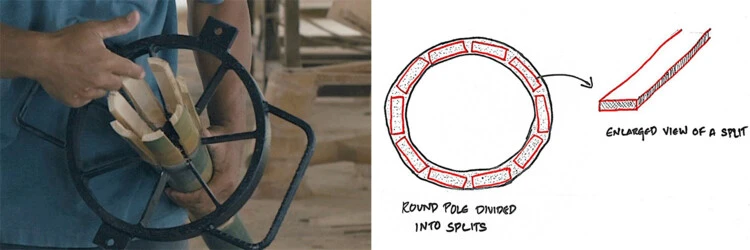
Bamboo laths or splits are made by splitting full bamboo into strips. Splits have been used traditionally in a wide range of products. We have been experimenting with building using splits in various applications. Very strong and lightweight structures can be built using bamboo’s best property “tensile strength” with splits. Splits have freedom in bending and the arching systems can be shaped easily.
Courtesy of BambooU
Courtesy of BambooU

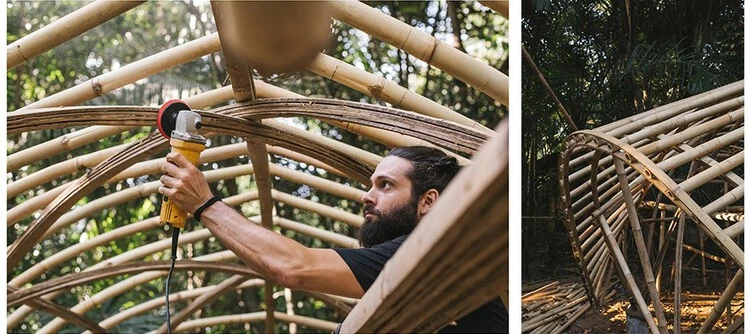
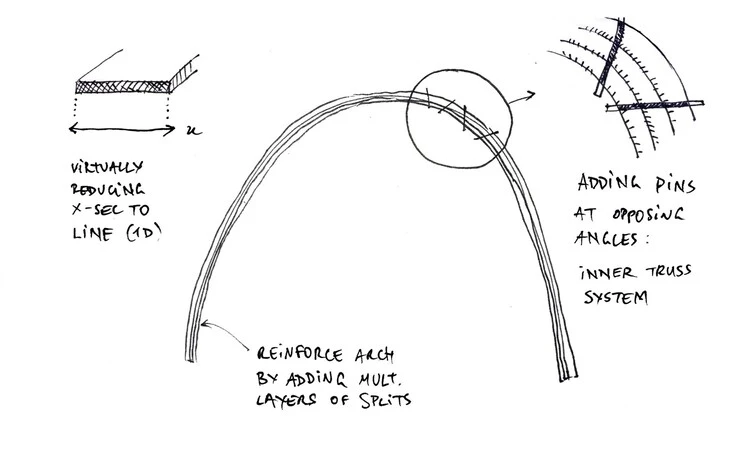
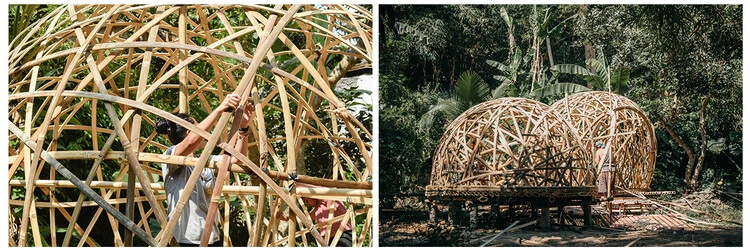
For some structural members to have structural integrity, we use a clump of bamboo splits tied together called a split bundle. The elements are assembled on the ground using templates and installed into place easily. Dendrocalamus Asper splits are used for structural elements and Gigantochloa Apus for non-structural elements. The splits are glues together, the split bundles are pinned together with bamboo pins in opposing angles to ensure there is no moment in the bundle.
Courtesy of BambooU
Courtesy of BambooU
Courtesy of BambooU
Courtesy of BambooU

To know more about a typology of how to build with bamboo splits check out our Pool hang-out pods article, and River bend house at Bambu Indah article.

3. Lidi Bundles
Courtesy of BambooU
Courtesy of BambooU

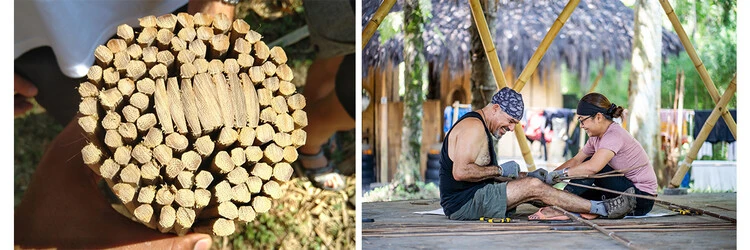
Lidi bundles are hand whittled thin, long, and solid circular bamboo sticks bundled together. The result is a curved and flexible element that is adjustable in shape, dimension, and length.
Courtesy of BambooU
Courtesy of BambooU

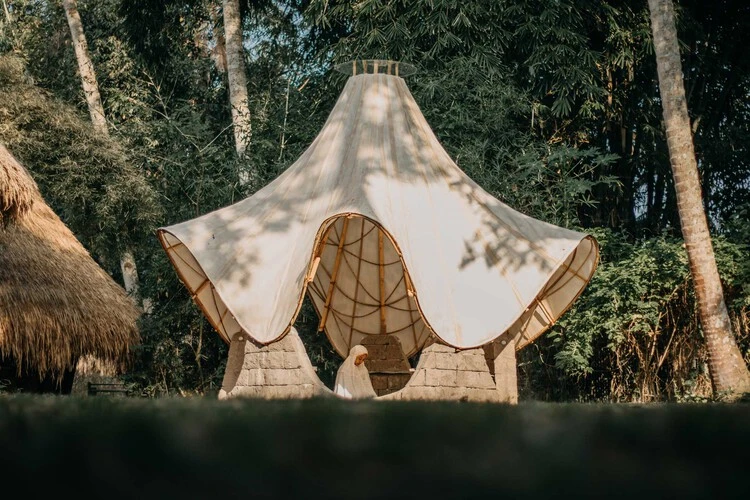
The flexibility of lidi bundles complements the organic and curvilinear roofing structures more beautifully and artistically. Sharma Springs, a six-level bamboo residence designed by IBUKU, is one of the best buildings that exhibits the use of the lidi bundle.

Lidi bundles are tied together on the ground by hand and tightened by metal clamps to ensure they are tightly held together. The bundle is carried to site and installed in place using vertical supports. Lidi bundles need to be bound together carefully, paying special attention to each strip’s individual placement. Lidi bundles are used to make both structural and decorative elements.
Courtesy of BambooU
Courtesy of BambooU

This article was originally published here by Bamboo U, a bamboo architecture and design enterprise that focuses on sharing sustainable ways of building. Bamboo courses are available on their campus in Bali, Indonesia, and Online, lead in collaboration with the renowned design firm IBUKU and bamboo experts from around the world. From growing bamboo to treatment methods, bamboo design and model making, engineering, carpentry, and construction: their workshops cover all there is to know about bamboo building and design. Find out more & join a bamboo workshop here.


Credit: http://feedproxy.google.com/~r/ArchDaily/~3/sdSXcWC-NpM/how-bamboo-bends-to-create-curved-structures

SendShare19Send

Related Posts

House C / Martin Lejarraga Oficina de Arquitectura

House C / Martin Lejarraga Oficina de Arquitectura

June 22, 2021
0

House C / Martin Lejarraga Oficina de Arquitectura © David Frutos+ 40 Share ShareFacebookTwitterPinterestWhatsappMailOrhttps://www.archdaily.com/962914/house-c-martin-lejarraga-oficina-de-arquitectura Area Area of this architecture project...

Apartment 02 / Hugo Oliveira Arquitetura

Apartment 02 / Hugo Oliveira Arquitetura

June 22, 2021
0

Apartment 02 / Hugo Oliveira Arquitetura © Haruo Mikami+ 26 Share ShareFacebookTwitterPinterestWhatsappMailOrhttps://www.archdaily.com/963692/apartment-02-hugo-oliveira-arquitetura Area Area of this architecture project Area:  110...

Leave a Reply Cancel reply

Your email address will not be published. Required fields are marked *

Stay Connected

  • Trending
  • Comments
  • Latest
eufyCam 2C vs Blink XT2 Compared – Which is the best budget wire-free security camera?

eufyCam 2C vs Blink XT2 Compared – Which is the best budget wire-free security camera?

March 17, 2020
The 100 Most Sustainably Managed Companies in the World

The 100 Most Sustainably Managed Companies in the World

October 15, 2020
Let Light in: 17 Projects Using Polycarbonate

Let Light in: 17 Projects Using Polycarbonate

October 18, 2019
The Leading Industry 4.0 Companies 2019

The Leading Industry 4.0 Companies 2019

January 23, 2019
Why Smart Buildings of the Future Need Autonomous Cleaning

Why Smart Buildings of the Future Need Autonomous Cleaning

0
PG&E Faces Serious Financial Risk From Devastating California Wildfires

PG&E Faces Serious Financial Risk From Devastating California Wildfires

0
UC Santa Cruz Signs 2-MW Solar Parking Canopy Deal with ForeFront Power

UC Santa Cruz Signs 2-MW Solar Parking Canopy Deal with ForeFront Power

0
Shell Energy Inside Smart Buildings Solution

Shell Energy Inside Smart Buildings Solution

0
HqO Meets Rigorous Data Privacy and Security Standards to Provide Highest Level of Service to Global CRE Market

HqO Meets Rigorous Data Privacy and Security Standards to Provide Highest Level of Service to Global CRE Market

June 22, 2021
Focus on IOT

A mobile solution for faster, better field service management | iotosphere

June 22, 2021
Universal Electronics Inc. to Provide Voice-Enabled Android TV Remotes and QuickSet® Technologies to Claro Colombia

Universal Electronics Inc. to Provide Voice-Enabled Android TV Remotes and QuickSet® Technologies to Claro Colombia

June 22, 2021
House C / Martin Lejarraga Oficina de Arquitectura

House C / Martin Lejarraga Oficina de Arquitectura

June 22, 2021
CRETech IoT NYC

CRETechIoTNYC.com is a Breaking News Portal Addressing Technology Innovation within the NYC Commercial Real Estate Market.

Topics

  • CRETech NYC
  • Architectural Design
  • Connectivity
  • Relocation and Leases
  • White Papers

  • About
  • Privacy Policy
  • Contact Us

© 2018 cretechiotnyc by Designing Smarter Buildings Since 1979.

No Result
View All Result
  • Home
  • IoT
    • Sensors and Devices
    • Security
    • Building Automation
      • Predictive Maintenance
    • Wireless IoT
  • CRETech NYC
    • News and Events
  • Architectural Design
    • Building Design
      • Access Control & Surveillance
      • Audio Visual
      • Cabling Infrastructure
      • Command Centers
      • In Building Cellular
      • Power Over Ethernet POE
      • Unified Communication
      • Wireless Networks
  • Green Buildings
    • Sustainable Architecture
    • Green Certifications
    • Energy Optimization
    • Wellness
  • Connectivity
    • 5G
    • Fiber Connectivity
    • Outside Plant OSP
  • Blockchain IoT
    • Commercial Real Estate Blockchain
  • Relocation & Leases
    • Technology Relocation
  • White Papers
    • Smart Buildings
    • Smart Cities

© 2018 cretechiotnyc by Designing Smarter Buildings Since 1979.

\r\nCredit: http://feedproxy.google.com/~r/ArchDaily/~3/sdSXcWC-NpM/how-bamboo-bends-to-create-curved-structures ", "author": {"@type": "Person", "name": "cretkatm", "url": "/author/cretkatm/"}, "articleSection": ["Commercial Architecture"], "image": {"@type": "ImageObject", "url": "/wp-content/uploads/2021/05/1620941641_1.jpg", "width": 1920, "height": 1080}, "publisher": {"@type": "Organization", "name": "", "url": "", "logo": {"@type": "ImageObject", "url": ""}, "sameAs": ["#", "https://twitter.com/cre_ot", "https://www.linkedin.com/in/cretech-iot-nyc-0533ab175", "#"]}}